Having fine hair doesn’t mean you have to settle for flat, limp locks with no volume or length. Hair extensions have come a long way in recent years, and today there are more options than ever specifically suited to thinner hair types. Whether you’re dreaming of flowing length, fuller volume, or both, the right type of extensions applied by the right stylist can be a complete game-changer for thinner hair types.
At Eco Hair Studio in Claremont, Perth, we work with fine-haired clients every single day and understand their unique needs. This guide covers everything you need to know about getting extensions on thinner hair — from which methods work best, to how to protect your natural strands and make your extensions last.
Why Fine Hair Requires a Different Approach to Extensions
Fine hair has a smaller diameter per strand than medium or coarse hair. This means each individual hair carries less structural strength, and the scalp may have less density overall. While these strands are often silky and soft, they are also more vulnerable to tension, breakage, and stress from poorly applied extensions.
Not all extension methods are created equal when it comes to finer textures. Some techniques — like traditional clip-ins or heavy tape extensions applied without care — can cause traction alopecia, breakage, or visible wefts if applied to hair that isn’t strong enough to support the weight. The goal with fine hair extensions is to add volume and length without putting unnecessary strain on the natural hair shaft or follicle.
This is why a thorough consultation with an experienced extension specialist is so important before committing to any method. A skilled stylist will assess your hair density, scalp health, and lifestyle to recommend the safest, most flattering approach for your specific needs.
Best Hair Extension Methods for Fine Hair
There are several extension techniques that work particularly well for thinner strands. Each has its own advantages depending on your hair goals, budget, and how much maintenance you’re willing to commit to.
Tape-In Extensions
Tape-in extensions are one of the most popular choices for fine hair because they lie flat against the scalp and distribute weight evenly across a wider section of hair. Rather than concentrating tension on one small attachment point, tape-ins bond a thin weft of hair between two sections of your natural hair using a medical-grade adhesive tape.
When applied correctly by a trained stylist, tape-ins are gentle on fine hair and can last six to eight weeks before needing a re-tape. They blend seamlessly and add significant volume without bulky bonds near the roots. The key is ensuring the wefts are not placed too close to the scalp and that the sections of natural hair used to sandwich each tape are appropriate in thickness.
Nano Ring Extensions
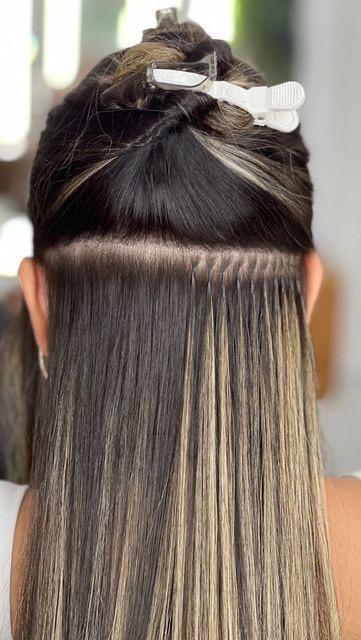
Nano ring extensions use tiny, micro-sized rings — roughly the size of a grain of rice — to attach individual hair strands to your natural hair. Because the rings are so small, they are an excellent choice for fine hair as they place minimal pressure on individual strands. There is no heat or adhesive involved, making this one of the least damaging methods available.
Nano rings sit close to the scalp and are virtually undetectable when applied by an experienced technician, even in the thinnest hair. They typically last ten to fourteen weeks before needing to be moved up as your natural hair grows. Regular maintenance appointments are essential to prevent the rings from slipping or causing unnecessary friction.
Weft (Sewn-In or Beaded) Extensions
Hand-tied or beaded weft extensions are another fantastic option for adding serious volume to fine hair. In this method, a row of small beads is applied horizontally along the head, and a weft of hair is sewn or tied onto the row. Because the weight is distributed across many attachment points rather than individual strands, this technique places less stress on any single section of hair.
Beaded wefts are particularly effective for clients with fine hair who want a fuller, more voluminous look without individual bonds that can be felt or seen through thinner strands. The result is a smooth, natural finish that blends beautifully.
Clip-In Extensions
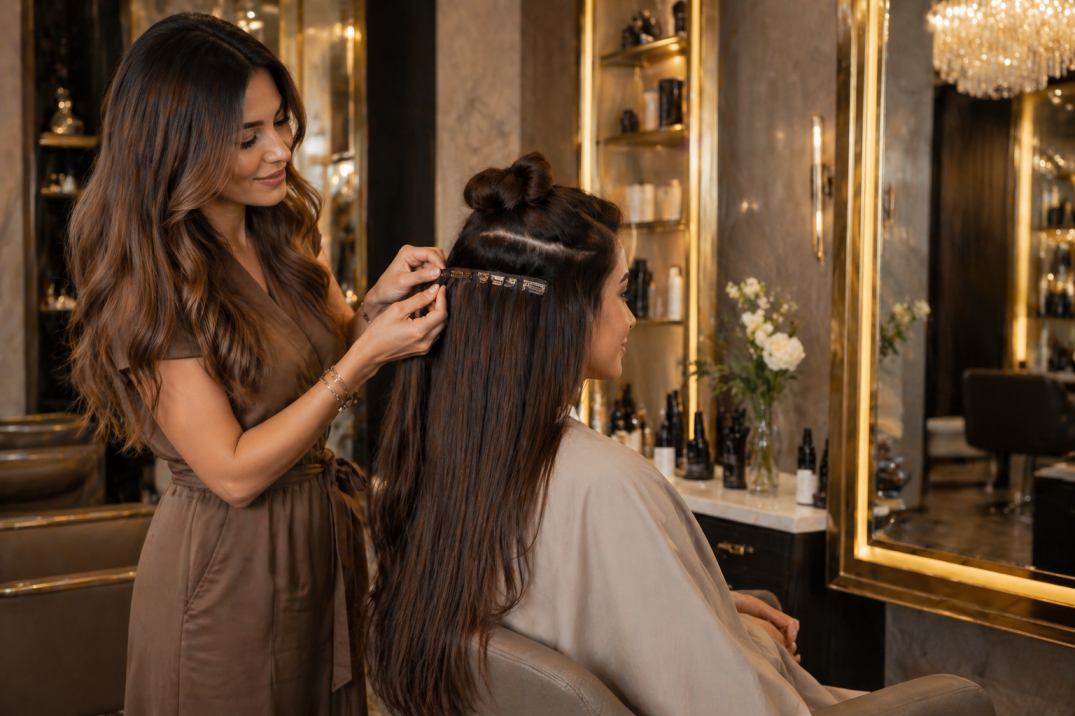
For clients who want a non-committal option, clip-in extensions can work well when used carefully and selectively. Clip-ins should only be worn for short periods — special occasions or days out rather than daily use — as repeated tension from the clips on delicate strands can lead to breakage over time. Always remove clip-ins before sleeping and avoid placing clips on the same sections repeatedly.
What to Avoid When Getting Extensions on Fine Hair
Knowing which methods to avoid is just as important as knowing which ones to choose wisely. For fine hair, the following extension types are generally not recommended:
- Hot fusion (keratin bond) extensions: These use heat to attach individual bonds to the hair, which can weaken fine hair strands over time, particularly if the hair is already fragile or prone to breakage.
- Micro bead extensions on very thin sections: While nano rings are fine, larger micro beads on thin sections can create too much concentrated tension for delicate strands.
- Heavy, thick wefts: Extensions that are too thick or heavy for the density of the natural hair will cause visible pulling at the root and potential long-term thinning.
- DIY application: Attempting to apply any semi-permanent extension method at home without professional training significantly increases the risk of damage, particularly for thinner, more delicate strands.
How to Protect Fine Hair While Wearing Extensions
Even the best extension method requires proper care to keep both your natural fine hair and your extensions in top condition. Here’s how to protect your strands throughout the process:
- Use sulphate-free, extension-safe products. Harsh sulphates can dry out both the extensions and your natural hair, making delicate strands more prone to tangling and breakage.
- Brush gently and regularly. Use a soft-bristle or loop brush designed for extensions and start from the ends, working your way up. Brushing from the root on fine, extension-wearing hair can cause unnecessary stress on the attachment points.
- Avoid heavy conditioners near the roots. Product buildup at the root area can loosen tape bonds and cause slippage. Focus conditioning products on the mid-lengths and ends.
- Sleep with your hair in a loose braid or plait. This prevents tangling overnight and reduces friction on the attachment points — a must for protecting delicate strands at the root.
- Never go to bed with wet hair. Wet hair stretches more easily than dry hair, and thinner strands are especially vulnerable to matting and tangling around extension bonds when damp.
- Keep up with maintenance appointments. Extensions that are left too long between appointments can grow out too far from the root and begin to place uneven tension on the natural hair, which is particularly damaging for thinner strands.
How Long Do Hair Extensions Last on Fine Hair?
The longevity of extensions on fine hair largely depends on the method chosen, the quality of the hair used, and how well the aftercare routine is followed. As a general guide:
- Tape-in extensions: 6–8 weeks before re-taping, with the hair itself lasting up to 12 months with proper care
- Nano ring extensions: 10–14 weeks before moving up
- Beaded weft extensions: 8–10 weeks before maintenance
- Clip-in extensions: Indefinite lifespan with correct storage and gentle handling
With consistent care and regular maintenance visits, extensions can look stunning for many months. The quality of the extension hair itself also plays a significant role — always opt for 100% Remy human hair, which is the most natural-looking and longest-lasting option available.
Book a Fine Hair Extensions Consultation at Eco Hair Studio
If you have fine hair and have always assumed extensions aren’t for you, we’re here to change your mind. The right method, applied by the right team, can give you the volume and length you’ve always wanted — safely, beautifully, and with minimal impact on your natural strands.
At Eco Hair Studio in Claremont, Perth, our extension specialists are experienced in working with all hair types, including the most delicate strands. We take the time to properly assess your hair, explain all your options, and create a result that looks completely natural, feels weightless, and truly lasts.
📍 Located at Times Square, Claremont WA — book your hair extensions consultation today and take the first step toward the full, flowing, confident hair you have always deserved.
Frequently Asked Questions About Hair Extensions for Fine Hair
Which Hair Extension Method Is Best for Thin Strands?
Tape-in and nano ring extensions are generally considered the most suitable options for delicate strands. Tape-ins distribute weight evenly and lie flat against the scalp, while nano rings are tiny and place minimal stress on individual strands. Your stylist will assess your specific hair density and condition before recommending the most suitable method for you.
Will Hair Extensions Cause Damage?
When applied professionally and maintained properly, hair extensions should not cause damage. Damage typically occurs when extensions are too heavy, applied incorrectly, or left in for too long without maintenance. This is why choosing an experienced extension specialist and committing to regular upkeep appointments is so important.
How Long Do Extensions Last?
This depends on the method used. Tape-in extensions typically last 6–8 weeks before needing a re-tape, nano rings last 10–14 weeks, and beaded wefts require maintenance every 8–10 weeks. With proper aftercare, the extension hair itself can last up to 12 months, making it a worthwhile investment regardless of hair type.
How Do I Stop Extensions From Showing Through My Hair?
The best way to prevent extension bonds or wefts from showing through thinner hair is to ensure your stylist uses the right sectioning technique and places attachments low enough to be covered by your natural hair. Tape-ins and nano rings are the least visible options for finer textures. An experienced stylist will tailor the placement specifically for your hair density.
Can I colour my hair while wearing extensions?
You can colour your natural hair while wearing extensions, but it requires care — especially for thinner, more delicate strands. It’s best to avoid applying bleach or permanent colour directly onto extension bonds or wefts, as this can degrade the attachment points. Your stylist can perform a root touch-up or gloss treatment that refreshes your colour without compromising the extensions.
How Should I Wash My Hair With Extensions?
Wash gently using a sulphate-free, extension-safe shampoo. Focus the shampoo on the scalp and let it rinse through the lengths rather than scrubbing the hair, which can cause tangling around bonds. Washing two to three times per week rather than daily helps preserve both the extensions and your natural hair’s moisture balance.