🗝️ Key Takeaways: Ammonia-Free Hair Colour
Choosing between ammonia-free hair colour and traditional dye isn’t just about avoiding that sharp chemical smell—it’s about understanding what happens beneath your scalp. Traditional formulas rely on ammonia to force open the hair cuticle, allowing pigment to penetrate deeply for long-lasting results. However, research shows this aggressive approach can compromise hair integrity and trigger scalp sensitivity in vulnerable individuals. Ammonia-free alternatives use gentler alkalising agents, such as monoethanolamine (MEA), which lift the cuticle more gradually whilst delivering comparable colour payoff. The trade-off? Traditional dyes typically offer superior grey coverage and permanence, whilst ammonia-free versions excel at preserving hair health and reducing irritation. Neither option is inherently “better”—your ideal choice depends on your scalp sensitivity, coverage needs, and whether you prioritise immediate results or long-term hair condition.
Ammonia-Free vs Traditional Hair Dye: Setting The Scene
The hair colour landscape has shifted dramatically over the past decade. Walk into any salon today, and you’ll find shelves split between two distinct camps: traditional oxidative dyes that rely on ammonia to open the hair cuticle, and newer permanent, ammonia-free colour formulations that promise gentler chemistry without compromising longevity.
This isn’t merely a marketing distinction. Research comparing dyeing efficacy shows that whilst traditional ammonia-based dyes have dominated the professional market for decades, alternative alkalising agents like ethanolamine can achieve similar colour deposit with less damage to the hair shaft. However, the trade-offs extend beyond chemistry—they touch on coverage intensity, colour vibrancy, and processing time.
How Ammonia Works In Hair Dye
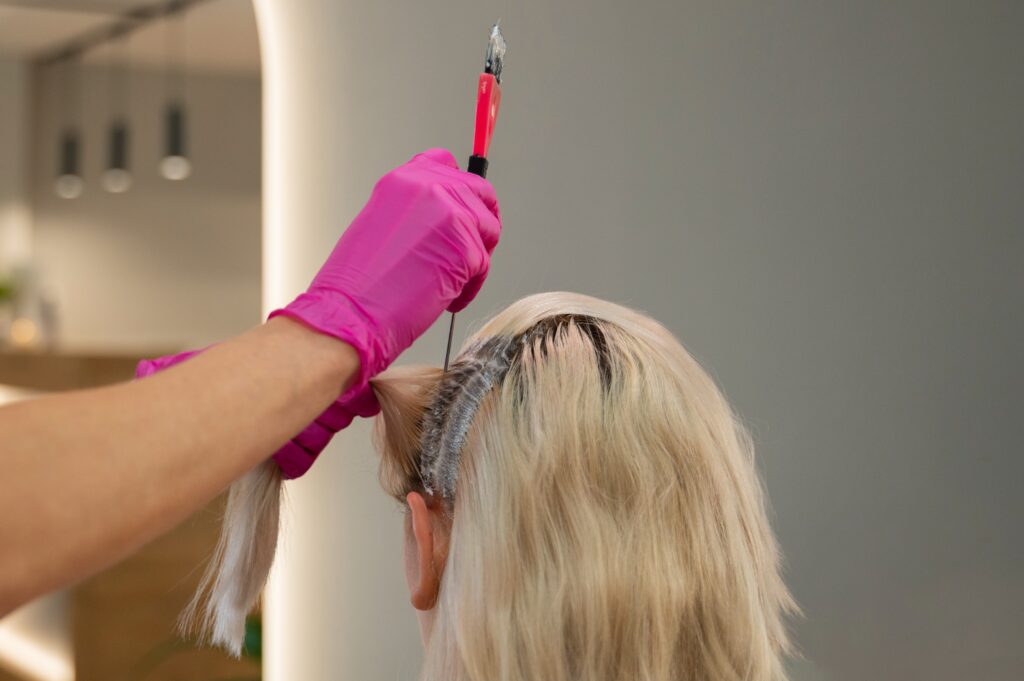
Understanding what ammonia-free hair colour is requires first grasping how traditional ammonia-based formulas operate at the molecular level. Ammonia serves as the workhorse alkaline agent in conventional hair dye, performing two critical functions that transform your hair colour from root to tip.
When ammonia contacts your hair shaft, it forces the cuticle layers to swell and separate—imagine forcing open tightly stacked roof tiles. This aggressive action creates pathways for colour molecules to penetrate deep into the cortex, where your hair’s natural melanin resides. Simultaneously, ammonia activates hydrogen peroxide, the oxidising agent that bleaches your existing pigment and allows new colour molecules to bond permanently. Research shows that this dual action delivers predictable, long-lasting results that resist fading through multiple wash cycles.
The trade-off? That distinctive, sharp smell signals ammonia gas escaping into the air—a substance with a pH level around 11.6 that can irritate respiratory passages and sensitive scalps. The cuticle damage also remains visible long after application: raised scales create rough texture, dullness, and increased porosity that makes hair prone to breakage. Clinical evaluations demonstrate that this structural disruption accumulates with repeated colouring sessions, particularly concerning those who touch up their colour monthly.
Traditional formulations rely on ammonia concentrations typically ranging between 2-6%, with higher percentages reserved for dramatic lightning. This alkaline environment fundamentally alters your hair’s protein structure—a necessary sacrifice for achieving vibrant, permanent colour that survives sun exposure and daily styling.
Benefits Of Ammonia-Free Hair Colour: A Closer Look
The benefits of ammonia-free hair dye extend far beyond simply avoiding that distinctive chemical smell. These modern formulations address multiple concerns that traditional dyes have historically posed for both hair health and user comfort.
Scalp sensitivity represents perhaps the most immediate advantage. A clinical evaluation of permanent hair dye designed to reduce scalp irritation found that ammonia-free formulas significantly decreased adverse reactions during application. The gentler alkalising agents—typically monoethanolamine (MEA) or alternative substitutes—don’t compromise the scalp’s protective barrier as aggressively as ammonia, making the colouring process considerably more comfortable for those with reactive skin.
From a sensory perspective, the absence of harsh fumes transforms the salon experience entirely. Traditional ammonia-based dyes release strong, eye-watering vapours that can trigger respiratory discomfort, particularly in enclosed spaces.
For pregnant women seeking ammonia-free hair colour, the gentler formulation offers peace of mind, though consultation with healthcare providers remains advisable. The reduced chemical volatility minimises inhalation risks whilst still delivering salon-quality results.
Who Should Choose Ammonia-Free Hair Colour?
Ammonia-free hair colour suits specific groups particularly well, though its benefits extend to virtually anyone seeking a gentler colouring experience. Those with sensitive scalps are the primary group, as traditional ammonia formulations can cause irritation, burning, and allergic reactions.
Pregnant and breastfeeding women frequently choose ammonia-free options to minimise chemical exposure during vulnerable periods. Whilst no definitive studies prove harm from conventional dyes, many healthcare professionals recommend erring on the side of caution. Similarly, individuals with respiratory sensitivities—including asthma sufferers—benefit significantly from eliminating the harsh fumes that characterise traditional hair dye applications.
Frequent colour users find ammonia-free formulations particularly valuable, as repeated exposure to harsh chemicals accelerates hair damage and scalp sensitivity. Those maintaining colour every 4-6 weeks experience notably better hair condition when switching to gentler alternatives. For anyone seeking a more comfortable salon experience without compromising results, professional applications for sensitive skin offer the ideal balance between colour performance and scalp comfort.
➡️ Ideal For Sensitive Scalps and First-Time Users
Ammonia-free hair colour provides significant advantages for individuals with heightened scalp sensitivity or those exploring hair colouring for the first time. Research indicates that modified formulations designed to reduce irritation demonstrate measurably improved tolerability, particularly in populations prone to dermatological reactions.
For first-time colourists, the psychological barrier often centres on concerns about discomfort. Traditional formulas frequently cause tingling or burning sensations during processing, which can deter continued use. Ammonia-free alternatives eliminate these immediate discomforts, creating a more pleasant introduction to hair colouring. The gentler application process allows nervous users to assess results without enduring harsh chemical experiences
How To Choose The Right Hair Colour For Your Needs
Selecting between ammonia-free hair colour and traditional hair dye requires assessing several personal factors beyond marketing claims. Your scalp sensitivity, desired colour transformation, and maintenance commitment all influence which formulation delivers optimal results.
Start by evaluating your scalp condition. If you experience irritation from chemical treatments or have a history of allergic reactions, ammonia-free formulations significantly reduce exposure to harsh alkaline agents. Research demonstrates that formulations designed to minimise irritation show measurably better tolerability profiles.
However, those with robust scalp tolerance may prioritise coverage efficiency over gentleness.
Consider your colour goals realistically. Traditional dyes excel at dramatic transformations—lightening dark hair by multiple shades or achieving full grey coverage in coarse textures. Ammonia-free alternatives work brilliantly for subtle shifts, tonal adjustments, or maintaining existing colour.
If you’re exploring gentler highlighting techniques, ammonia-free options provide safer pathways to dimensional colour without compromising scalp comfort.
📝 Final Thought: Ammonia-Free Or Traditional Hair Dye
The choice between ammonia-free hair colour and traditional hair dye ultimately depends on your individual priorities, scalp sensitivity, and desired results. Neither option is universally superior—each serves distinct needs within the hair colouring spectrum.
Traditional ammonia-based dyes remain the gold standard for dramatic transformations, maximum grey coverage, and long-lasting vibrancy. Their aggressive chemical action delivers predictable results that many colourists and clients trust. However, research confirms the irritation potential that accompanies these powerful formulations, particularly for those with reactive scalps or respiratory sensitivities.
Ammonia-free formulations represent a gentler approach that doesn’t sacrifice professional results. Modern alternatives use MEA and other substitutes to achieve colour penetration with reduced sensory discomfort and environmental impact.