Key Take-Away:-
➡️ K-Tip Hair Extensions move naturally and blend so seamlessly that they feel like your own hair.
➡️ Tape extensions add instant volume fast while still looking smooth and natural.
➡️ K-tips stay more hidden in ponytails, buns, and sleek updos.
➡️ Tape-ins are easier to maintain, while K-tips offer lighter, more flexible movement.
➡️ A skilled stylist matters most for creating flawless, natural-looking extensions.
Introduction
K-Tip Hair Extensions have become one of the most popular beauty upgrades for adding instant length, volume, and confidence. Among the many methods available today, K-Tip Hair Extensions and Tape-In extensions stand out as two of the most requested salon options. Both can deliver beautiful, fuller-looking hair, but when it comes to achieving the most seamless and natural appearance, the choice often depends on your hair type, lifestyle, and styling goals.
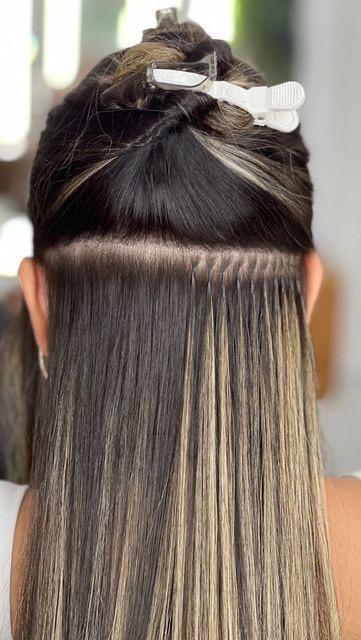
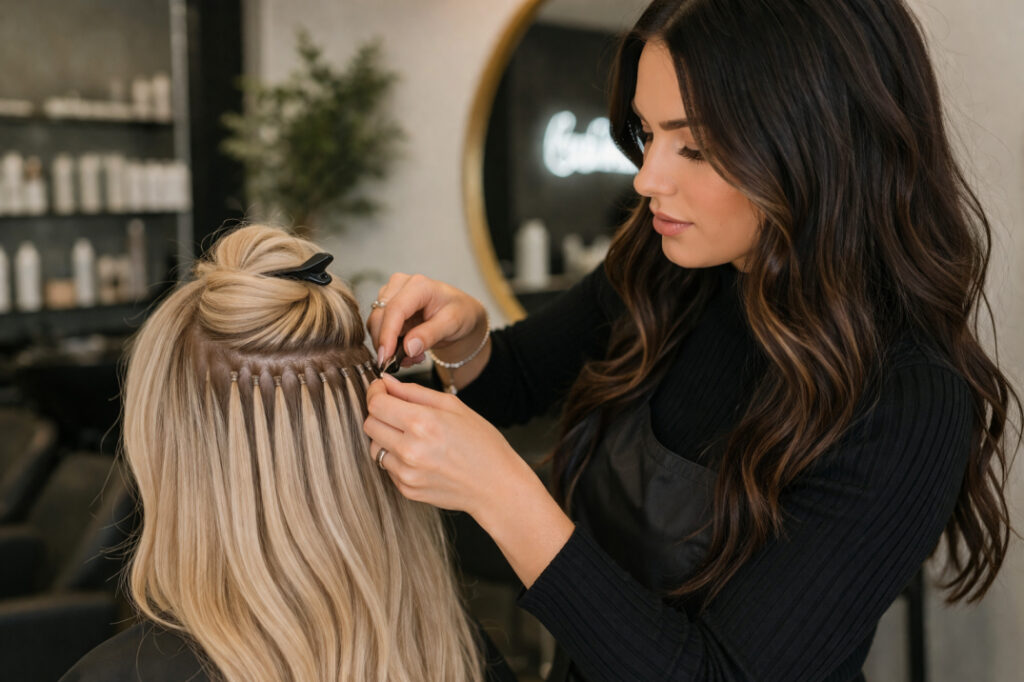
K-Tip Hair Extensions, also known as keratin bond extensions, are attached strand by strand using a heat-activated keratin bond. Because they mimic the natural movement of real hair, many stylists consider them the most discreet and realistic-looking option available. Tape-In extensions, on the other hand, are applied using thin adhesive wefts that are sandwiched between sections of natural hair. They are lightweight, quick to install, and blend exceptionally well when applied correctly.
The debate over which looks more natural ultimately comes down to details like hair density, placement, movement, and maintenance. While K-Tips are often praised for their invisible finish and flexibility, Tape-Ins are loved for their flat appearance and comfortable wear. Understanding how each method works can help you decide which extension type will give you the most natural, effortless result.
K-Tip Hair Extensions vs Tape Extensions: Understanding The Real Difference
K-tip hair extensions use individual keratin bonds attached strand by strand to natural hair using heat fusion. The bonds are tiny, flexible, and discreet, which allows the extensions to move naturally with your hair.
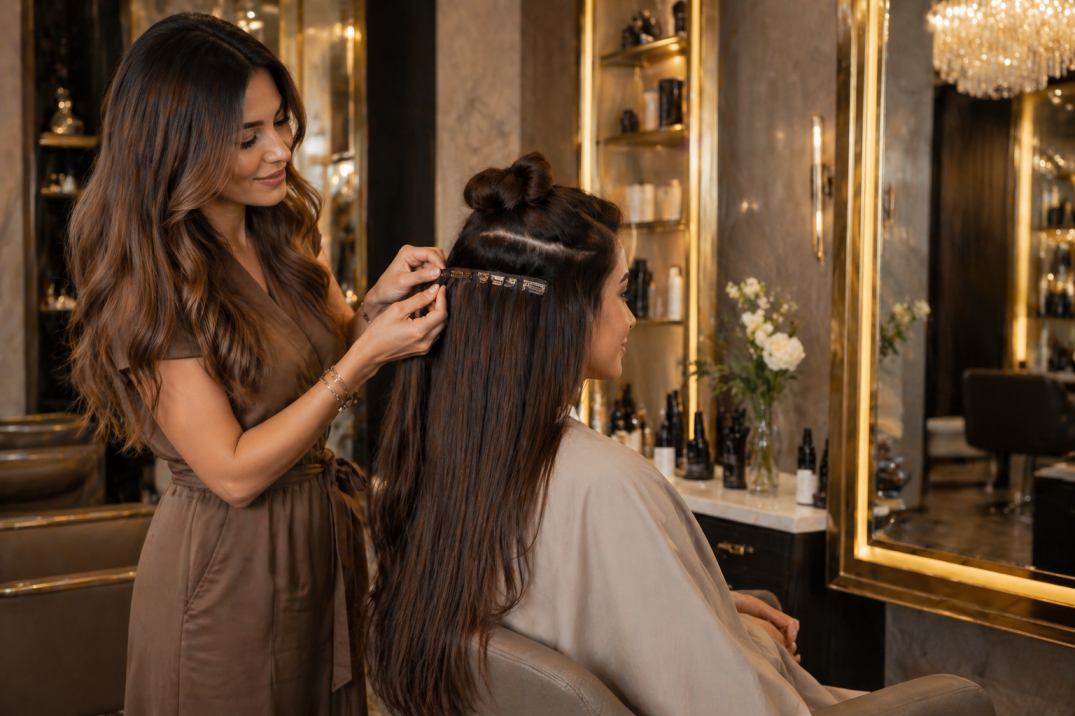
Tape extensions, on the other hand, come in small wefts attached with medical-grade adhesive tape. They sit flat against the scalp and are applied much faster than K-tips.
At first glance, both methods can look beautiful. The real difference shows up in movement, blending, maintenance, and how the extensions behave over time.
Which Hair Extension Method Gives The Most Natural Finish?
If “natural” means invisible, lightweight, and believable even in a ponytail, K-Tip Hair Extensions usually take the lead.
Because they are installed strand by strand, they mimic the way real hair grows. There’s no wide panel or obvious attachment point. This creates soft movement and a more organic finish, especially for people with layered hairstyles.
Tape extensions, however, create a flatter look against the scalp. For someone with fine or straight hair, this can actually appear more seamless because the tapes lie smoothly without adding bulk.
In simple terms:
- K-tips often win for movement and flexibility
- Tape extensions often win for flatness and quick blending
The “most natural” choice depends heavily on your own hair texture.
Why K-Tip Hair Extensions Are Popular For Long-Term Luxury Hair Transformations
Luxury salons often recommend K-Tip Hair Extensions for clients wanting a high-end, long-lasting transformation.
Because they’re customisable, stylists can place them strategically around the head to create dimension, softness, and invisible volume. They also work beautifully for layered cuts and glamorous styling.
Another reason people love K-tips is freedom. You can wear high ponytails, sleek buns, beach waves, or side braids without worrying about exposed tapes.
The bonds are tiny enough to stay hidden, even during movement.
That said, K-Tip Hair Extensions require patience. Installation can take several hours, and removal must be done professionally to avoid breakage.
The Natural Look Advantage Of Tape Hair Extensions
Tape extensions deserve more credit than they usually get.
Modern tape-ins have become thinner, softer, and far less detectable than older versions. When applied correctly, they sit flush against the scalp and blend surprisingly well.
They’re especially popular among people who:
- Want instant volume
- Prefer shorter salon appointments
- Like reusable extensions
- Have naturally straight or fine hair
Many clients also find tape extensions more comfortable during the first few weeks because there’s less tension from individual bonds, and financially, tapes are usually more affordable upfront.
Hair Texture, Volume & Blending: What Matters Most
This is where many people make the wrong choice.
The best extension method is not about trends. It’s about compatibility.
➡️ Fine Hair:- Tape extensions often blend better because the flat panels stay discreet under thinner strands.
➡️ Thick Hair:- K-tips usually look more natural because they distribute weight evenly and move freely through dense hair.
➡️ Curly or Layered Hair:- K-Tip Hair Extensions generally create softer blending without visible separation points.
➡️ Thin Crown Areas:- Tape extensions can sometimes become noticeable if hair is very sparse near the scalp. A skilled stylist matters more than the method itself. Poor placement can make even expensive extensions look obvious.
Comfort, Maintenance & Daily Styling Compared
Tape extensions are easier to maintain for most beginners. They require repositioning every 6–8 weeks and can be reused multiple times.
K-Tip Hair Extensions last longer — often up to 4–6 months — but they demand more careful aftercare.
You’ll need:
- Sulfate-free products
- Gentle brushing
- Proper drying near the bonds
- Regular salon maintenance
Daily comfort also varies.
Some people forget they even have K-tips after a week. Others prefer the lightweight feel of tapes. It often comes down to scalp sensitivity and sleeping habits.
Which Hair Extensions Last Longer Without Looking Fake?
K-Tip Hair Extensions typically age more naturally. Because the bonds move individually with your hair growth, they maintain a realistic appearance longer than tape extensions.
Tape extensions may begin showing wider gaps as natural hair grows out. If maintenance appointments are delayed, the tapes can become easier to spot.
For people wanting long-term wear with minimal visibility, K-tips usually perform better.
Cost Comparison: Are K-Tip Extensions Worth The Investment?
K-Tip Hair Extensions are usually more expensive because they take longer to install and require more precision.
But many clients feel the investment is worth it for the realism alone.
Tape extensions cost less initially and are quicker to apply, making them appealing for first-time extension users.
A good way to think about it:
- Tape extensions = convenience and affordability
- K-Tip Hair Extensions = luxury and long-term realism
Neither is wrong. The better choice depends on your priorities.
Professional Stylist Advice: Choosing The Right Extension Method
Experienced stylists usually ask three questions before recommending extensions:
- What’s your natural hair density?
- How often do you heat-style your hair?
- Do you want temporary volume or a long-term transformation?
Someone who constantly wears sleek ponytails may love K-tips. Someone wanting occasional fullness for events may prefer tapes.
The biggest mistake is choosing based only on social media trends.
Common Mistakes That Make Hair Extensions Look Unnatural
Even premium extensions can look artificial when installed incorrectly.
Common mistakes include:
- Choosing the wrong colour match
- Installing extensions that are too thick for natural hair
- Poor blending around the face
- Ignoring haircut integration
- Overusing heavy products near bonds or tapes
Natural-looking extensions should never sit like a separate layer. They should disappear into your real hair.
Final Thought
Both K-Tip and Tape-In extensions can create stunning, natural-looking hair when installed by an experienced stylist and matched properly to your hair texture and color. However, if the goal is the most invisible movement and the closest imitation of natural hair growth, K-Tip Hair Extensions are often considered the winner because of their strand-by-strand application and flexible placement.
In the end, the most natural-looking extensions are not just about the method itself — they depend on high-quality hair, professional installation, and proper aftercare. Choosing the right extension type for your hair texture, daily routine, and styling habits will always produce the most flawless and believable results.
FAQs
1. Do K-Tip Hair Extensions Damage Natural Hair?
Not when applied and removed professionally. Proper maintenance is essential to avoid breakage.
2. Are Tape K-Tip Hair Extensions Better For Thin Hair?
Yes, tape extensions often blend more smoothly with fine or thin hair because they lie flat against the scalp.
3. Which Lasts Longer: K-Tip Hair Extensions or Tape Extensions?
K-Tip Hair Extensions usually last longer, often up to 4–6 months with proper care.
4. Can You Wear High Ponytails With Tape Extensions?
You can, but placement matters. K-tips generally offer more styling flexibility for high hairstyles.
5. Which Hair Extension Method Looks Most Realistic?
K-Tip Hair Extensions are often considered the most natural-looking because of their strand-by-strand application and realistic movement.