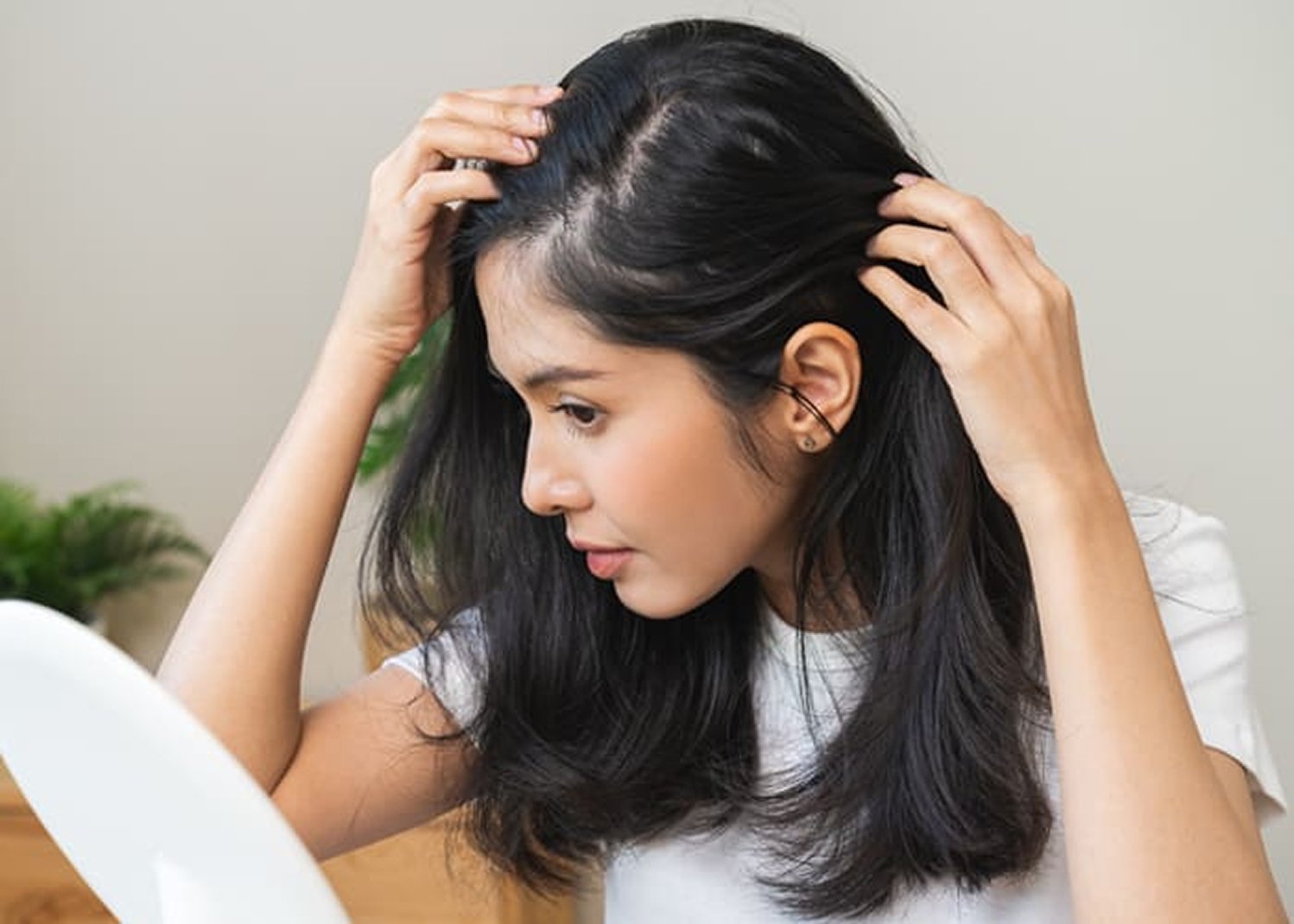
You finally booked that colour appointment. The stylist applied the dye, you sat under the dryer, and within hours, your scalp was burning, your ears were swelling, and your forehead looked sunburned. Or maybe it was subtler: just persistent itching that never fully went away after your colour.
Hair dye allergy are far more common than most people realise — and far more serious than a bit of scalp irritation. The good news is that once you understand what’s happening in your body, you have real options for colouring your Hair Dye Allergy safely.
This guide explains the difference between an allergy and a sensitivity, the specific chemicals most likely to be causing your reaction, and what a genuinely safer colour experience looks like.
Allergic Reaction From Hair Dye
An allergic reaction from hair dye is an immune response triggered by one or more chemical compounds in the colour formula coming into contact with your skin. The most common cause of an allergic reaction from hair dye is PPD (paraphenylenediamine) — a primary pigment agent present in most conventional permanent colour.
Symptoms of an allergic reaction from hair dye range from mild scalp itching and redness at the hairline, to swelling of the face and neck, to — in severe cases — anaphylaxis requiring emergency medical treatment. The reaction typically occurs 24–72 hours after exposure (not immediately during the appointment), and tends to worsen with each subsequent exposure if the sensitising ingredient is not identified and avoided.
Allergic Reaction to Hair Color Treatment: Immediate Steps
If you experience an allergic reaction to hair color treatment, the priority is to remove the product immediately. Rinse your hair and scalp thoroughly with cool water — not hot, which increases skin absorption. Do not attempt to process or rinse gently “to save the colour.” Remove the formula completely.
After rinsing, apply a gentle hydrocortisone cream to any inflamed skin and take an oral antihistamine. If your reaction to hair color treatment involves facial swelling, throat tightening, or difficulty breathing — seek emergency care immediately.
After any allergic reaction to hair color treatment, see your GP or a dermatologist for formal allergy testing before your next salon appointment. A patch test in a clinical setting can identify the specific ingredient responsible and inform which colour alternatives are safe for you.
Pain Tolerance and Hair Color: Is There a Genetic Link?
One of the more surprising connections in hair science is between pain tolerance and hair color. Research has found that the MC1R gene — responsible for red and auburn pigmentation — also plays a role in pain signalling pathways. Studies suggest that people with red hair may require more anaesthetic during dental and medical procedures, and may experience scalp sensations (including tingling and mild burning during colour processing) with more intensity.
So pain tolerance and hair color are genuinely connected — though the relationship is more nuanced than simple folklore. For clients who have always found colour processing uncomfortable, their hair colour may offer a partial explanation. This is not a reason to avoid colour, but it is a reason to communicate clearly with your stylist: lower developer volume, shorter processing times, and ammonia free formulas all reduce scalp sensation significantly.
The Difference Between a Hair Dye Allergy, Sensitivity and a True Allergy
These two terms are often used interchangeably, but they describe different things — and the distinction matters for how you manage it.
Sensitivity (Irritant Contact Dermatitis)
A sensitivity is a direct reaction to a chemical irritant — it doesn’t involve your immune system. Almost anyone can develop it if the concentration of the irritant is high enough. Symptoms typically appear during or shortly after application and include tingling, itching, redness, and mild burning at the site of contact.
Ammonia is one of the most common culprits. It’s highly alkaline and penetrates the scalp during processing, causing localised irritation — especially in people with naturally sensitive skin, eczema, or dermatitis.
True Allergy (Allergic Contact Dermatitis)
A true allergy involves your immune system recognising a chemical as a threat and launching a defence response. The first exposure may cause no noticeable reaction — your immune system is ‘learning’. But on subsequent exposures, it responds with increasing force.
Symptoms of an allergic reaction to hair dye allergy can include: severe itching or burning well beyond the scalp, a rash or hives spreading to the face, neck, or ears, swelling around the eyes or face, blistering of the scalp or hairline, and, in rare, severe cases, anaphylaxis — a life-threatening systemic reaction requiring emergency treatment.
Important: Allergy Can Develop Over Time
- You can colour your hair for 10+ years without any reaction — and then develop an allergy
- Each exposure can sensitise your immune system further
- A mild reaction in one appointment can become severe the next
- Once a true allergy develops, re-exposure to the same chemical must be avoided permanently
The Main Culprits: PPD and Ammonia
PPD (Para-Phenylenediamine)
PPD is the most common cause of allergic reactions to permanent hair colour. It’s a synthetic chemical compound used in the vast majority of conventional permanent dyes because it creates rich, long-lasting colour that penetrates deep into the hair shaft.
PPD is classified as a strong sensitiser — meaning it has a high potential to cause immune system sensitisation. The EU, Canada, and Australia all regulate its use in cosmetics, but it remains legally permitted and widely used. If you’ve ever had a skin allergy test (patch test) for a hair dye allergy, PPD is the molecule being tested for.
What makes PPD tricky is that cross-reactivity is common. People with a PPD allergy may also react to related chemicals, including IPPD (found in rubber, latex gloves), benzocaine and procaine (local anaesthetics), certain sunscreens, and sulfonamide antibiotics.
Ammonia
Ammonia is an alkaline gas that traditional permanent colour uses to swell the Hair Dye Allergy shaft and open the cuticle, allowing colour molecules to penetrate. While it’s primarily an irritant rather than an allergen, it can trigger and worsen existing sensitivities. It’s also what causes the sharp, eye-watering smell you associate with conventional salons — and it affects stylists who breathe it in every day, not just clients.
Resorcinol
Often paired with PPD in conventional colour, resorcinol is a coupling agent that helps develop colour. It’s an environmental endocrine disruptor and a skin irritant in its own right. Some people who react to PPD are also sensitive to resorcinol.
How To Tell If You Have a Hair Dye Allergy
| Symptom | Likely Cause |
|---|---|
| Scalp itching during or right after application | Ammonia irritation or PPD sensitivity |
| Redness or rash at the hairline/ears | Allergic contact dermatitis (PPD) |
| Swelling around the eyes, face or neck | Allergic reaction — seek medical advice |
| Blistering or weeping skin on the scalp | Severe allergic reaction — stop use immediately |
| Symptoms appear 12–48 hours after colouring | Classic delayed hypersensitivity — likely PPD allergy |
| Symptoms are getting worse with each appointment | Progressive sensitisation — allergy likely developing |
| Persistent itchy scalp between appointments | Ongoing sensitivity or other scalp condition |
If you experience swelling of the face or throat, difficulty breathing, or feel faint after hair colouring, seek emergency medical treatment immediately. This could indicate anaphylaxis.
The Patch Test: Why It Matters and Why Skipping It Is Risky
A patch test involves applying a small amount of the colour formula to a discreet patch of skin — usually behind the ear or inside the elbow — and leaving it for 48 hours to observe any reaction.
Most salons recommend a patch test, but in practice, clients often skip it if they are in a hurry or have coloured their hair before without issue. This is genuinely risky. An allergy can develop at any time, and the severity of a reaction cannot be predicted from previous exposures.
At Eco Hair Studio, we take patch testing seriously — particularly for new clients and for anyone who hasn’t coloured in more than three months. It takes 48 hours of patience, but it potentially saves you from a serious reaction.
Safer Colour Options If You Have a Known Sensitivity
PPD-Free Colour (O&M)
Original & Mineral (O&M) — one of the two professional colour systems we use at Eco Hair — is formulated without PPD and without resorcinol. It’s an Australian-born brand designed specifically for clients who need clean, allergy-conscious colour without sacrificing results. For people with known PPD sensitivity, this is one of the most credible professional alternatives available in Australia.
Ammonia-Free Colour (Aveda and O&M)
Both colour systems we use at Eco Hair are ammonia-free. This eliminates the most common source of scalp irritation during the colouring process. Clients who previously experienced burning, itching, or scalp redness with conventional colour consistently report a dramatically more comfortable experience with our formulas.
Patch Testing Before Every Service
If you have a known PPD allergy or a history of reactions, patch testing before every colour service — not just the first — is the responsible approach. Formulas can change, and your immune response can evolve. We’ll never skip this step for clients who need it.
Henna and Plant-Based Alternatives
Pure henna (not compound henna, which can still contain PPD) is a genuinely chemical-free colouring option for some clients. However, it significantly limits the range of achievable tones and has its own considerations. We can discuss whether this is appropriate for your situation at a consultation.

The Bottom Line
Hair dye allergies are not a niche problem — they affect a meaningful proportion of people who colour regularly, and the risk increases with cumulative exposure. Understanding whether you have a sensitivity or a true allergy, knowing which chemicals to avoid, and choosing a salon that uses genuinely cleaner formulas is the difference between colouring confidently and taking a risk every appointment.
At Eco Hair Studio, allergy-conscious colour isn’t a marketing claim — it’s the foundation of everything we do. If you’ve had a reaction before, or you’re simply nervous about colouring for the first time, come in for a consultation. We’ll take the time to understand your history and build a plan that’s right for you.
Frequently Asked Questions
1. What causes an allergic reaction from hair dye if I have coloured for years without problems?
Sensitisation to PPD or other hair dye ingredients can develop at any point — after years of problem-free use. The immune system learns to recognise the allergen over repeated exposures, and at some point may mount a full reaction. This is why patch testing before every appointment is essential, not just the first time.
2. Is an allergic reaction to hair color treatment different from a scalp irritation?
Irritation (a non-immune response) causes burning or discomfort during processing that resolves quickly after rinsing. An allergic reaction to hair color treatment involves immune-mediated inflammation — redness, swelling, itching, and blistering that often begins hours after the appointment and may worsen over 24–48 hours. Irritation is unpleasant; an allergic reaction requires medical attention.
Book Safe Colour in Perth
PPD free · Ammonia free · Full patch test service · Eco Hair Studio Claremont.
Book: ecohairstudio.com.au · Call: (08) 6114 1635
Times Square, Shop 17, 1–26 Avion Way, Claremont WA 6010